
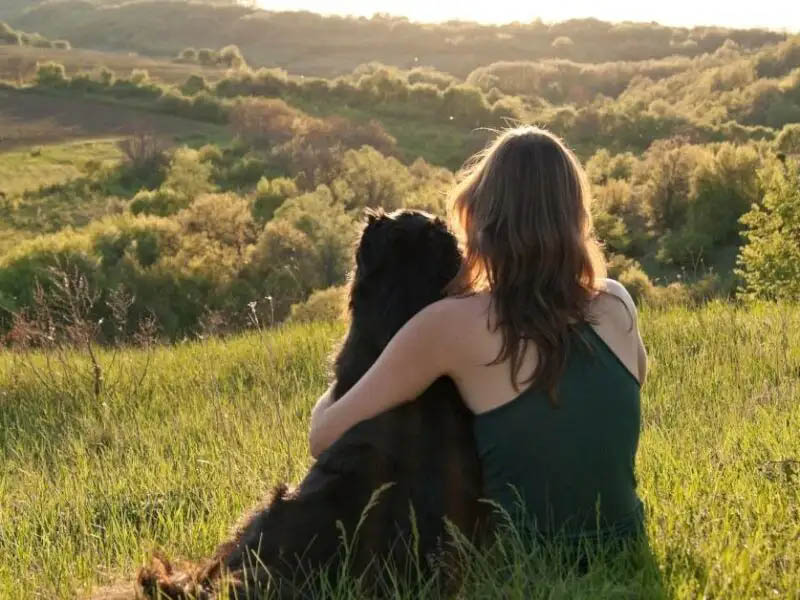
How to Show Your Dog You Love Them in 8 Simple Ways
This post may include affiliate links. Please read my disclosure policy.
I love my dog. She is one of the best things in my life, and there’s nothing I wouldn’t do to keep her healthy and happy.
Showing dogs how much they mean to you can be tricky though. And if they don’t respond as you expect, you may wonder, “Does my dog love me?”
If you haven’t found the answer, rest assured that dogs have ways to communicate their love that surpass the need for words. Just as we humans express love in various ways, so do dogs.
Though your pooch can’t say “I love you,” actions speak louder than words. Like with their enthusiastic tail wagging whenever you walk through the door. Or their constant need for physical touch, never missing an opportunity to cuddle with you on the couch or to nuzzle into your hands for a comforting pet.
These are all signs of your dog expressing their undying love. But how do we reciprocate our love for them in ways they can easily understand?
Pin Me!

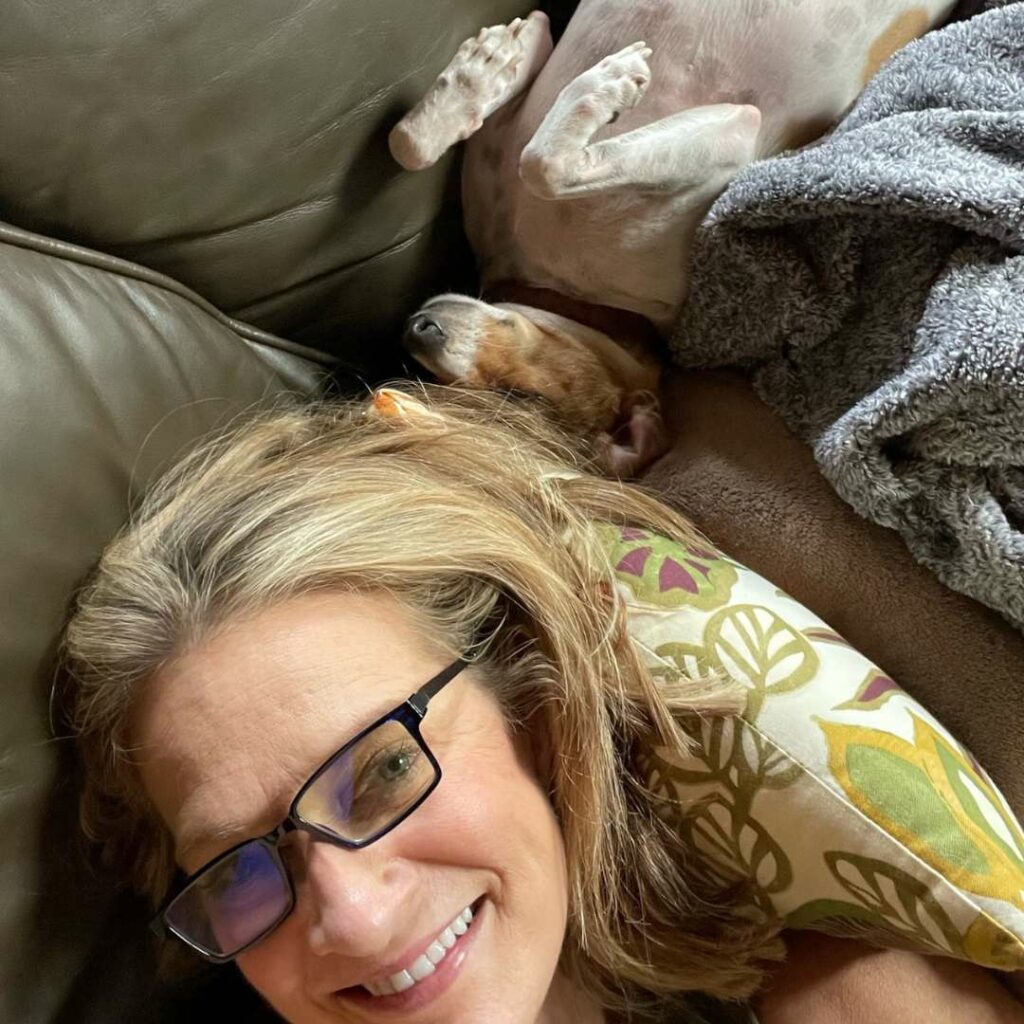
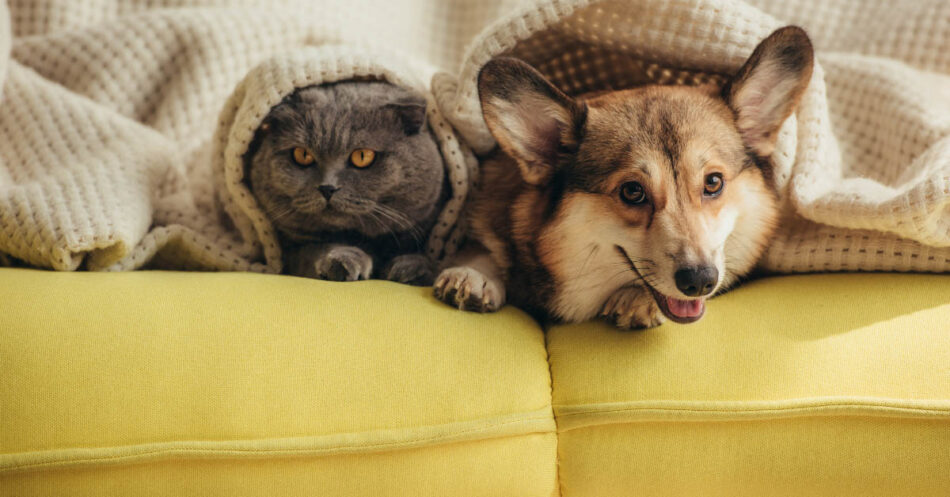
5. Snuggle
Not all dogs enjoy hugs, but most love cuddling. Canines are pack animals, and close contact makes them feel safe and secure. Allowing your dog to sleep with you is the ultimate display of trust and affection since this is when you are the most vulnerable.
However, even if you’d prefer to keep your bed dog-free, you can still create daily opportunities to show your dog you love them by snuggling up on the couch or in a cozy corner with them on the floor. They’ll be sure to get your message.
Don’t be confused with hugging and snuggling (or cuddling). The words “snuggle” and “hug” have slightly different meanings, but they both refer to showing affection. However, hugging can be more intimidating for dogs because when you hug, you embrace someone with two arms. And it may involve wrapping your arms around the neck or body, which dogs would potentially find threatening or at the very least, uncomfortable or undesirable.
6. Talk to Your Dog
Another way you can show your dog love is to use your “dog voice!” Dogs love being talked to, and they love it when you use their name. Some studies show adult dogs may understand hundreds of words and phrases. Besides, when you talk to your dog in a caring and encouraging tone, they respond to such positive reinforcement.
So go ahead and tell your dog about your day and talk to them about what you’re doing or what you’ll do together. See how many words your dog knows! Positive reinforcement through words can also promote good behavior.
Baby talk with your dog is more than just adorable; it’s effective too! A study published in Animal Cognition revealed that using a natural, playful tone (like the one used when speaking to babies) combined with words relevant to dogs, can possibly grab dogs’ attention more effectively and help strengthen the bond between them and their humans. However, if you’re not a fan of baby talk, no worries, just use your normal tone.
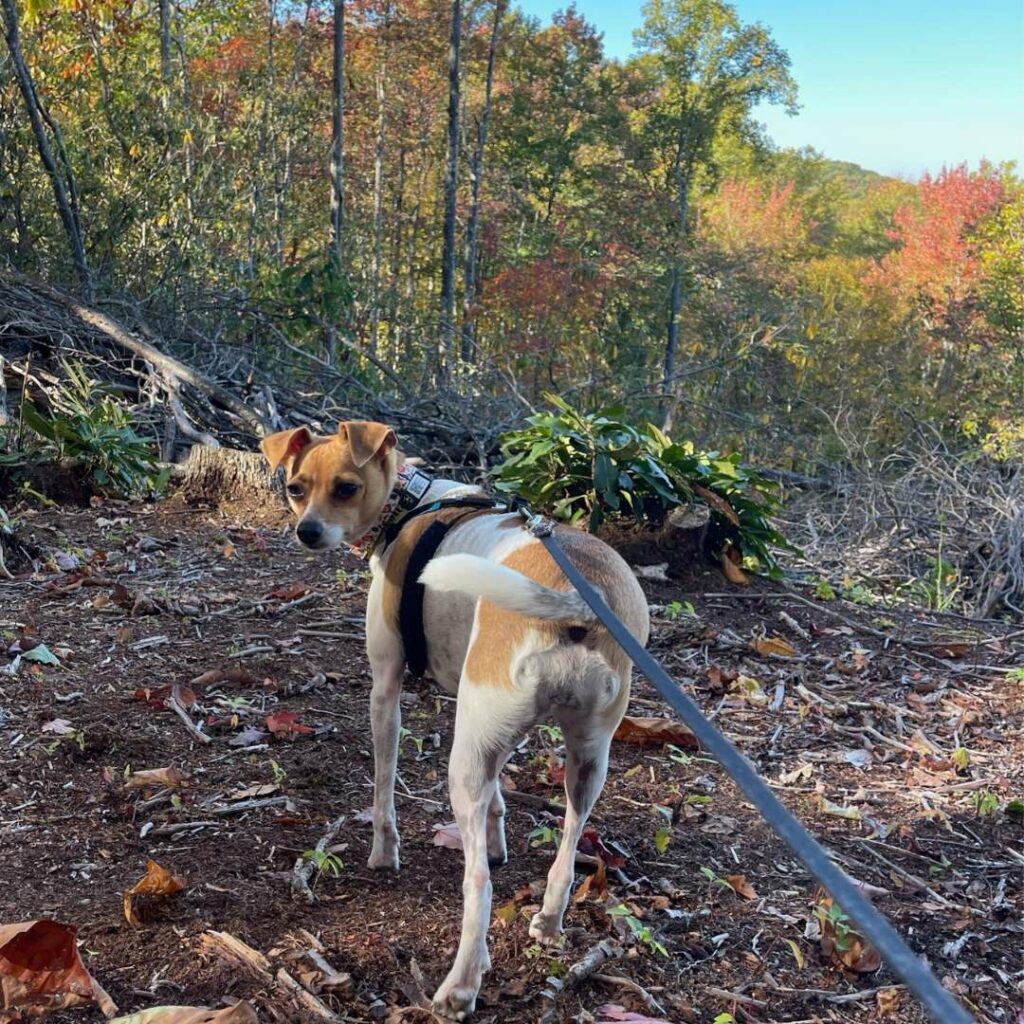
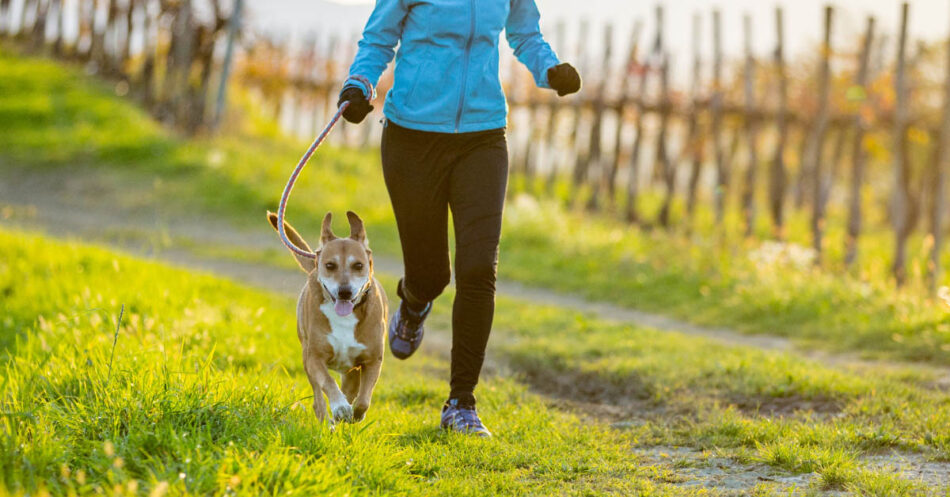
7. Go for Walks Together
When you’re home, you may be snuggling with your dog, but it’s unlikely you’re sharing experiences together. You might be watching TV or scrolling on your phone, things your dog could care less about.
But when you’re walking together, you’re sharing the experience, all the sights, sounds, and smells that accompany the walk—although your dog can smell a lot more than you do!
Enjoying this shared experience can bring you closer together and forge a strong bond.
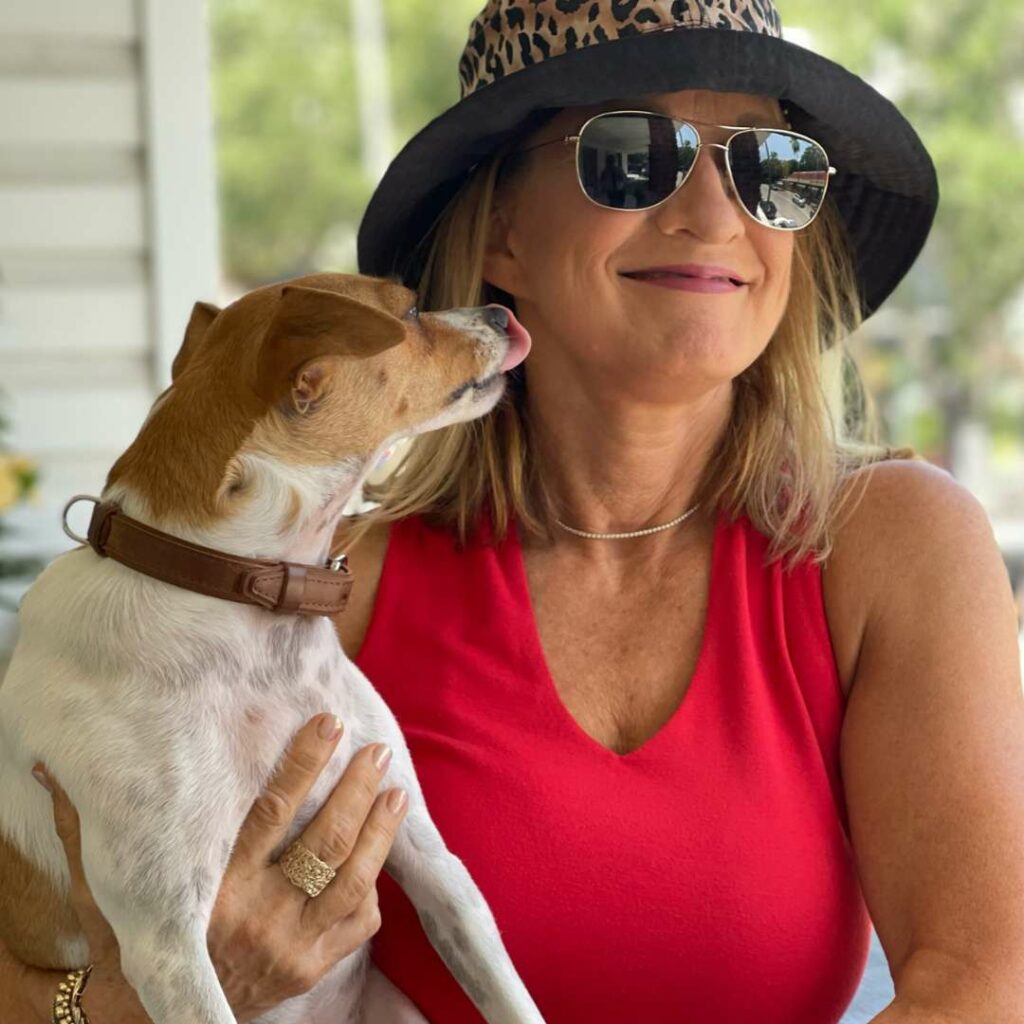
8. Let Them Kiss You
Licking is their way of showing affection. So when you accept this gift of love, you show your dog how much you love them! Licking releases endorphins and dopamine, making your dog feel calm and secure.
Things to Avoid When Showing Your Dog You Love Them
In essence, showing affection to your dog involves understanding their world and respecting their boundaries. Keep in mind that while your intentions are pure, certain things may not translate the same way in dog language. Reading their cues accurately and adjusting your actions accordingly fosters a loving environment for your four-legged friend.
Here are expressions of affection that your dog may find uncomfortable or undesirable or may be bad for them in the long run.
Hugs
Even though I know that most dogs aren’t the biggest fans of big hugs, I sometimes have to fight the urge to give Tulip a loving squeeze. After all, hugging is one of the most natural ways for humans to show affection, including furry friends. However, for many of our canine companions, a hug from their pet parents is unwelcome or even threatening, especially if they feel trapped.
Additionally, eye contact while hugging can be threatening to many dogs. Even though your dog feels like part of the family, they may still lash out and bite if they feel threatened by close contact
Many pet parents are surprised to learn that their beloved pets are merely tolerating these embraces, with most dogs showing signs of stress when hugged. Sometimes, communication mishaps occur between us and our pets due to our inability to fully comprehend their communication methods. Learning to decipher their unique body language can significantly enhance our bond and elevate their happiness.
It’s easier for everyone to slowly accustom your dog to hugs, linking the action with rewards or treats to foster a positive association. This is vital if you want your pet to be a therapy dog.
However, other dog-friendly expressions of love, such as a scratch behind the ears or games you play together, may be a more welcome substitute for hugs. This way, you’re respecting your furry family members’ boundaries while also preserving the warm bond between you.
Treats
Training through positive reinforcement can be a great way to bond with your pet as well! But while treats are a great way to show your dog attention, especially during training sessions, they should be limited. Some dog parents make the mistake of thinking that the best way to their dog’s heart is through their stomach. Don’t get me wrong—a healthy treat and some goodies have their place, but too many of them can easily lead to weight gain and all of the health issues that come with it.
Paw or Ear Massage
Us humans love a good massage—it’s one of the best ways to wind down and pamper ourselves, especially after a particularly long day. You can do the same for your pups! Some dogs love a good “roobs” behind their ears, and some appreciate some light massages on their paws (not all dogs may like this, as their paws have a lot of delicate and sensitive nerve endings and blood vesse. My colleague’s husky, Egg, for example, hates having her paws touched, as it stresses her out).
Understanding Dog Body Language
Sometimes, we and our four-legged buddies experience a few hiccups in communication, mainly because we don’tfully understand what they’re trying to tell us. Remember, while they can’t use words to express how they feel, our dogs are pretty observant, relying on our nonverbal signals to make sense of their world. Learning how dogs communicate with us can definitely boost our bond and make their tails wag a little happier!
Tail Wagging
It’s a misconception that when dogs wag their tails, they are happy. A wagging tail can mean many things. You might be surprised to know that your furry friend’s tail is its very own little language. According to Dr. Ryan Llera at VCA Animal Hospitals, your dog’s tail position can communicate many things:
- Raised tail. It could mean your dog is alert and ready to face what drew their interest.
- Arching over their back. They might be feeling aggressive.
- Lowered tail. It’s your pet’s way of showing submission or that they’re scared.
- Straight out. They’re probably investigating a new interesting scent or sound.
- Neutral position or slightly raised and wagging. Your buddy is relaxed or happy!
Remember, though, that some breeds of dog have naturally curled tails that coil over their backs, like the Samoyeds, Pugs, and Pomeranians. Meanwhile, others like Greyhounds and Whippets have tails that naturally curl under their bellies, so consider your dog’s natural tail position based on their dominant breed type when reading into their tail position.
The speed of the wag can tell you even more. A fast wag can signal high excitement, a slight wag could mean they’re feeling timid, and a wag with some hip wriggling, well, that’s the canine version of your dog giving you a super-friendly hello! Although, be watchful, because a very fast wag with the tail upright could also mean your pooch is about to become threatening—so remember, a wagging tail isn’t always a friendly one!
Yawning
Dogs yawn for a bunch of different reasons, not just because they’re tired like us humans.
Sometimes yawning is a physical thing that helps stimulate their nervous system or cool their brains, writes Dr. Manetter Kohler in “Why Do Dogs Yawn?” on PetMD. They usually yawn when they’re transitioning from one state to another, like from sleep to wakefulness or from being bored to being alert.
Here’s a fun fact: dogs also yawn to communicate emotional feelings. If a yawn pops out when they’re in a stressful situation, maybe at the veterinary clinic, during a household argument, being hugged too tightly, or being approached by a stranger, they’re trying to calm themselves down. It’s like their version of taking deep breaths!
Plus, dogs even yawn to show they want to avoid conflicts or signal that they’re peaceful. Ever noticed how contagious yawning is? Dogs catch that too, especially from their favorite humans. It’s a sweet way they empathize with us!
If you notice your pup yawning a lot and showing signs they’re not comfortable, they’re likely feeling anxious or stressed. It’s like they’re telling you, “Hey, human, I need a break!” In that case, helping them avoid stressful situations or offering a safe, quiet space for them can be super helpful. Isn’t it amazing how much they can say without using words?
Licking
Dogs love to lick, and their reasons for doing so can vary widely. One of the most common motivations is affection and social bonding. Your dog’s cheeky face-licking greeting when you come home from work is likely their quirky way of saying “You’re the best!” They’re expressing love and delight at your presence.
Licking also serves as a grooming ritual for dogs, helping them to stay clean. And don’t forget their curiosity too. Dogs have a keen sense of smell and taste, so that exploratory lick on an object or post-meal lick on your hand is likely your dog’s taste-based way of understanding their surroundings.
Also, licking can sometimes be a peace offering. Dogs who feel submissive or threatened might lick as a conciliatory gesture. Additionally, excessive licking might indicate possible medical issues, such as allergies or anxiety.
Being aware of the context is crucial in interpreting these canine linguistics. While licking is generally harmless, if it bothers you or seems linked to a health problem, don’t hesitate to talk to a veterinarian for expert advice. So whether as a sign of love or exploration, your dog’s licks are as fascinating as they are varied!

FAQs
Why Should I Show My Dog Love?
Showing love to your dog cements the emotional bond between you and him. As pack animals, dogs have an intrinsic need to feel connected and accepted by their pack, or in the case of a dog, their human family. You validate their place in your life by expressing your love, which is fundamental to their emotional health.
Spending time with your dog, like taking walks together, as mentioned, also demonstrates affection and is something dogs crave and cherish, much like humans do with close friends.
Does My Dog Know When I Am Sad?
From my experience, dogs are very attuned to our emotions. Whenever I cry, my dog will gently place her head or paw on my lap, as if to comfort me. Another one of my dogs, who sadly passed away recently, had even picked up on the unique sound of my sniffles when I cry and would climb onto the bed to lie beside me, offering her silent support.
This personal connection I’ve observed is also backed by research, which indicates that dogs not only know when we’re in distress but they also try to find ways to help us. Their instinct to be by our side during emotional times is a heartwarming reminder of their deep-seated empathy and unconditional love for us.
Does My Dog Know I Love Them?
The short answer is “probably.” But only if you know how to speak your dog language. As mentioned, hugs, kisses, and treats don’t necessarily translate to love in a dog’s native language.
Dogs are pack animals, and they rely on their pack’s queues for signs of approval and love.
They do this primarily through body language, physical touch, and group activities like hunting and exercising.
One of the best things about dogs is how well they know their favorite people. They can tell when we’re stressed out and when we’re calm and happy. And we can be sure that our voices, body language, and actions communicate to them how much they mean to us.
The bond between humans and dogs has huge benefits for people and animals. My ebook explains how bonding with your dog can improve your mind, body, spirit, and community. Click here to download your free copy.
5. Snuggle
Not all dogs enjoy hugs, but most love cuddling. Canines are pack animals, and close contact makes them feel safe and secure. Allowing your dog to sleep with you is the ultimate display of trust and affection since this is when you are the most vulnerable.
However, even if you’d prefer to keep your bed dog-free, you can still create daily opportunities to show your dog you love them by snuggling up on the couch or in a cozy corner with them on the floor. They’ll be sure to get your message.
Don’t be confused with hugging and snuggling (or cuddling). The words “snuggle” and “hug” have slightly different meanings, but they both refer to showing affection. However, hugging can be more intimidating for dogs because when you hug, you embrace someone with two arms. And it may involve wrapping your arms around the neck or body, which dogs would potentially find threatening or at the very least, uncomfortable or undesirable.
6. Talk to Your Dog
Another way you can show your dog love is to use your “dog voice!” Dogs love being talked to, and they love it when you use their name. Some studies show adult dogs may understand hundreds of words and phrases. Besides, when you talk to your dog in a caring and encouraging tone, they respond to such positive reinforcement.
So go ahead and tell your dog about your day and talk to them about what you’re doing or what you’ll do together. See how many words your dog knows! Positive reinforcement through words can also promote good behavior.
Baby talk with your dog is more than just adorable; it’s effective too! A study published in Animal Cognition revealed that using a natural, playful tone (like the one used when speaking to babies) combined with words relevant to dogs, can possibly grab dogs’ attention more effectively and help strengthen the bond between them and their humans. However, if you’re not a fan of baby talk, no worries, just use your normal tone.
7. Go for Walks Together
When you’re home, you may be snuggling with your dog, but it’s unlikely you’re sharing experiences together. You might be watching TV or scrolling on your phone, things your dog could care less about.
But when you’re walking together, you’re sharing the experience, all the sights, sounds, and smells that accompany the walk—although your dog can smell a lot more than you do!
Enjoying this shared experience can bring you closer together and forge a strong bond.
8. Let Them Kiss You
Licking is their way of showing affection. So when you accept this gift of love, you show your dog how much you love them! Licking releases endorphins and dopamine, making your dog feel calm and secure.
Things to Avoid When Showing Your Dog You Love Them
In essence, showing affection to your dog involves understanding their world and respecting their boundaries. Keep in mind that while your intentions are pure, certain things may not translate the same way in dog language. Reading their cues accurately and adjusting your actions accordingly fosters a loving environment for your four-legged friend.
Here are expressions of affection that your dog may find uncomfortable or undesirable or may be bad for them in the long run.
Hugs
Even though I know that most dogs aren’t the biggest fans of big hugs, I sometimes have to fight the urge to give Tulip a loving squeeze. After all, hugging is one of the most natural ways for humans to show affection, including furry friends. However, for many of our canine companions, a hug from their pet parents is unwelcome or even threatening, especially if they feel trapped.
Additionally, eye contact while hugging can be threatening to many dogs. Even though your dog feels like part of the family, they may still lash out and bite if they feel threatened by close contact
Many pet parents are surprised to learn that their beloved pets are merely tolerating these embraces, with most dogs showing signs of stress when hugged. Sometimes, communication mishaps occur between us and our pets due to our inability to fully comprehend their communication methods. Learning to decipher their unique body language can significantly enhance our bond and elevate their happiness.
It’s easier for everyone to slowly accustom your dog to hugs, linking the action with rewards or treats to foster a positive association. This is vital if you want your pet to be a therapy dog.
However, other dog-friendly expressions of love, such as a scratch behind the ears or games you play together, may be a more welcome substitute for hugs. This way, you’re respecting your furry family members’ boundaries while also preserving the warm bond between you.
Treats
Training through positive reinforcement can be a great way to bond with your pet as well! But while treats are a great way to show your dog attention, especially during training sessions, they should be limited. Some dog parents make the mistake of thinking that the best way to their dog’s heart is through their stomach. Don’t get me wrong—a healthy treat and some goodies have their place, but too many of them can easily lead to weight gain and all of the health issues that come with it.
Paw or Ear Massage
Us humans love a good massage—it’s one of the best ways to wind down and pamper ourselves, especially after a particularly long day. You can do the same for your pups! Some dogs love a good “roobs” behind their ears, and some appreciate some light massages on their paws (not all dogs may like this, as their paws have a lot of delicate and sensitive nerve endings and blood vesse. My colleague’s husky, Egg, for example, hates having her paws touched, as it stresses her out).
Understanding Dog Body Language
Sometimes, we and our four-legged buddies experience a few hiccups in communication, mainly because we don’tfully understand what they’re trying to tell us. Remember, while they can’t use words to express how they feel, our dogs are pretty observant, relying on our nonverbal signals to make sense of their world. Learning how dogs communicate with us can definitely boost our bond and make their tails wag a little happier!
Tail Wagging
It’s a misconception that when dogs wag their tails, they are happy. A wagging tail can mean many things. You might be surprised to know that your furry friend’s tail is its very own little language. According to Dr. Ryan Llera at VCA Animal Hospitals, your dog’s tail position can communicate many things:
- Raised tail. It could mean your dog is alert and ready to face what drew their interest.
- Arching over their back. They might be feeling aggressive.
- Lowered tail. It’s your pet’s way of showing submission or that they’re scared.
- Straight out. They’re probably investigating a new interesting scent or sound.
- Neutral position or slightly raised and wagging. Your buddy is relaxed or happy!
Remember, though, that some breeds of dog have naturally curled tails that coil over their backs, like the Samoyeds, Pugs, and Pomeranians. Meanwhile, others like Greyhounds and Whippets have tails that naturally curl under their bellies, so consider your dog’s natural tail position based on their dominant breed type when reading into their tail position.
The speed of the wag can tell you even more. A fast wag can signal high excitement, a slight wag could mean they’re feeling timid, and a wag with some hip wriggling, well, that’s the canine version of your dog giving you a super-friendly hello! Although, be watchful, because a very fast wag with the tail upright could also mean your pooch is about to become threatening—so remember, a wagging tail isn’t always a friendly one!
Yawning
Dogs yawn for a bunch of different reasons, not just because they’re tired like us humans.
Sometimes yawning is a physical thing that helps stimulate their nervous system or cool their brains, writes Dr. Manetter Kohler in “Why Do Dogs Yawn?” on PetMD. They usually yawn when they’re transitioning from one state to another, like from sleep to wakefulness or from being bored to being alert.
Here’s a fun fact: dogs also yawn to communicate emotional feelings. If a yawn pops out when they’re in a stressful situation, maybe at the veterinary clinic, during a household argument, being hugged too tightly, or being approached by a stranger, they’re trying to calm themselves down. It’s like their version of taking deep breaths!
Plus, dogs even yawn to show they want to avoid conflicts or signal that they’re peaceful. Ever noticed how contagious yawning is? Dogs catch that too, especially from their favorite humans. It’s a sweet way they empathize with us!
If you notice your pup yawning a lot and showing signs they’re not comfortable, they’re likely feeling anxious or stressed. It’s like they’re telling you, “Hey, human, I need a break!” In that case, helping them avoid stressful situations or offering a safe, quiet space for them can be super helpful. Isn’t it amazing how much they can say without using words?
Licking
Dogs love to lick, and their reasons for doing so can vary widely. One of the most common motivations is affection and social bonding. Your dog’s cheeky face-licking greeting when you come home from work is likely their quirky way of saying “You’re the best!” They’re expressing love and delight at your presence.
Licking also serves as a grooming ritual for dogs, helping them to stay clean. And don’t forget their curiosity too. Dogs have a keen sense of smell and taste, so that exploratory lick on an object or post-meal lick on your hand is likely your dog’s taste-based way of understanding their surroundings.
Also, licking can sometimes be a peace offering. Dogs who feel submissive or threatened might lick as a conciliatory gesture. Additionally, excessive licking might indicate possible medical issues, such as allergies or anxiety.
Being aware of the context is crucial in interpreting these canine linguistics. While licking is generally harmless, if it bothers you or seems linked to a health problem, don’t hesitate to talk to a veterinarian for expert advice. So whether as a sign of love or exploration, your dog’s licks are as fascinating as they are varied!
FAQs
Why Should I Show My Dog Love?
Showing love to your dog cements the emotional bond between you and him. As pack animals, dogs have an intrinsic need to feel connected and accepted by their pack, or in the case of a dog, their human family. You validate their place in your life by expressing your love, which is fundamental to their emotional health.
Spending time with your dog, like taking walks together, as mentioned, also demonstrates affection and is something dogs crave and cherish, much like humans do with close friends.
Does My Dog Know When I Am Sad?
From my experience, dogs are very attuned to our emotions. Whenever I cry, my dog will gently place her head or paw on my lap, as if to comfort me. Another one of my dogs, who sadly passed away recently, had even picked up on the unique sound of my sniffles when I cry and would climb onto the bed to lie beside me, offering her silent support.
This personal connection I’ve observed is also backed by research, which indicates that dogs not only know when we’re in distress but they also try to find ways to help us. Their instinct to be by our side during emotional times is a heartwarming reminder of their deep-seated empathy and unconditional love for us.
Does My Dog Know I Love Them?
The short answer is “probably.” But only if you know how to speak your dog language. As mentioned, hugs, kisses, and treats don’t necessarily translate to love in a dog’s native language.
Dogs are pack animals, and they rely on their pack’s queues for signs of approval and love.
They do this primarily through body language, physical touch, and group activities like hunting and exercising.
One of the best things about dogs is how well they know their favorite people. They can tell when we’re stressed out and when we’re calm and happy. And we can be sure that our voices, body language, and actions communicate to them how much they mean to us.
The bond between humans and dogs has huge benefits for people and animals. My ebook explains how bonding with your dog can improve your mind, body, spirit, and community. Click here to download your free copy.
[/vc_column_text][/vc_column][/vc_row]
How to Tell Your Dog You Love Them in Ways They Understand
Here are some ways to express your love to your dog in ways they’ll understand.
1. Rub Your Dog’s Ears
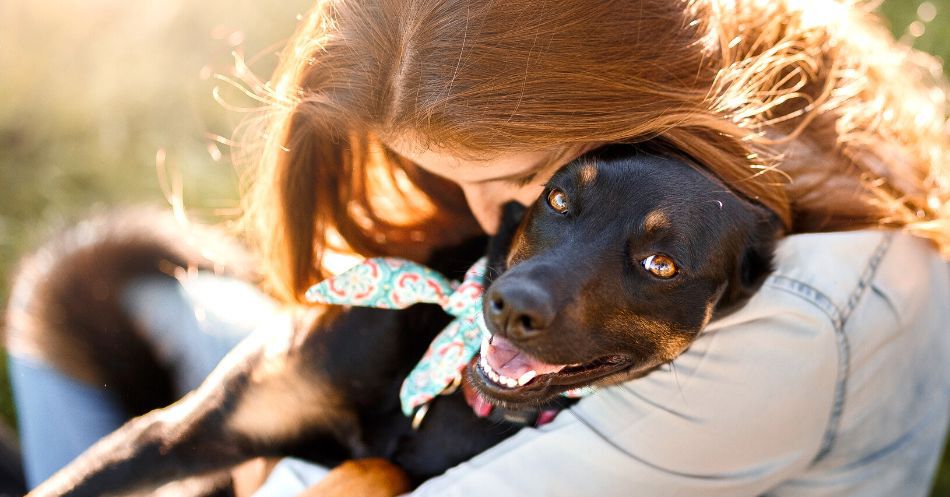
Here’s one of the best ways to show your dog love: instead of patting them on the top of their head, try giving them a gentle scratch behind their ears. Watch their reaction—they will most likely melt into a ball of doggy happiness.
This is because rubbing a dog’s ears stimulates the release of endorphins—hormones that relieve pain and bring on feelings of pleasure.
2. Lean on Them
Has your dog ever pressed up against your legs or leaned onto you while you were sitting together? This is one way that dogs seek affection, kind of like a doggie hug. It’s also a sign of deep trust.
You can “hug” them back by doing the same thing.
3. Gaze Softly Into Their Eyes
One way to show your dog love is through eye contact. Take a quiet moment, speak softly to them while petting them gently, and just gaze into their eyes.
Try raising your eyebrows (especially the left one). Your dog will view this as a display of affection. This action will naturally increase your dog’s level of oxytocin, a feel-good hormone that aids in bonding.
A word of caution: maintain direct eye contact only with a dog who knows and trusts you. A dog unfamiliar with you is more likely to interpret this gesture as a threat or a challenge.
4. Play Together
Spend some time every day doing something that your pooch enjoys. Try teaching them a new trick or practicing ones they already know.
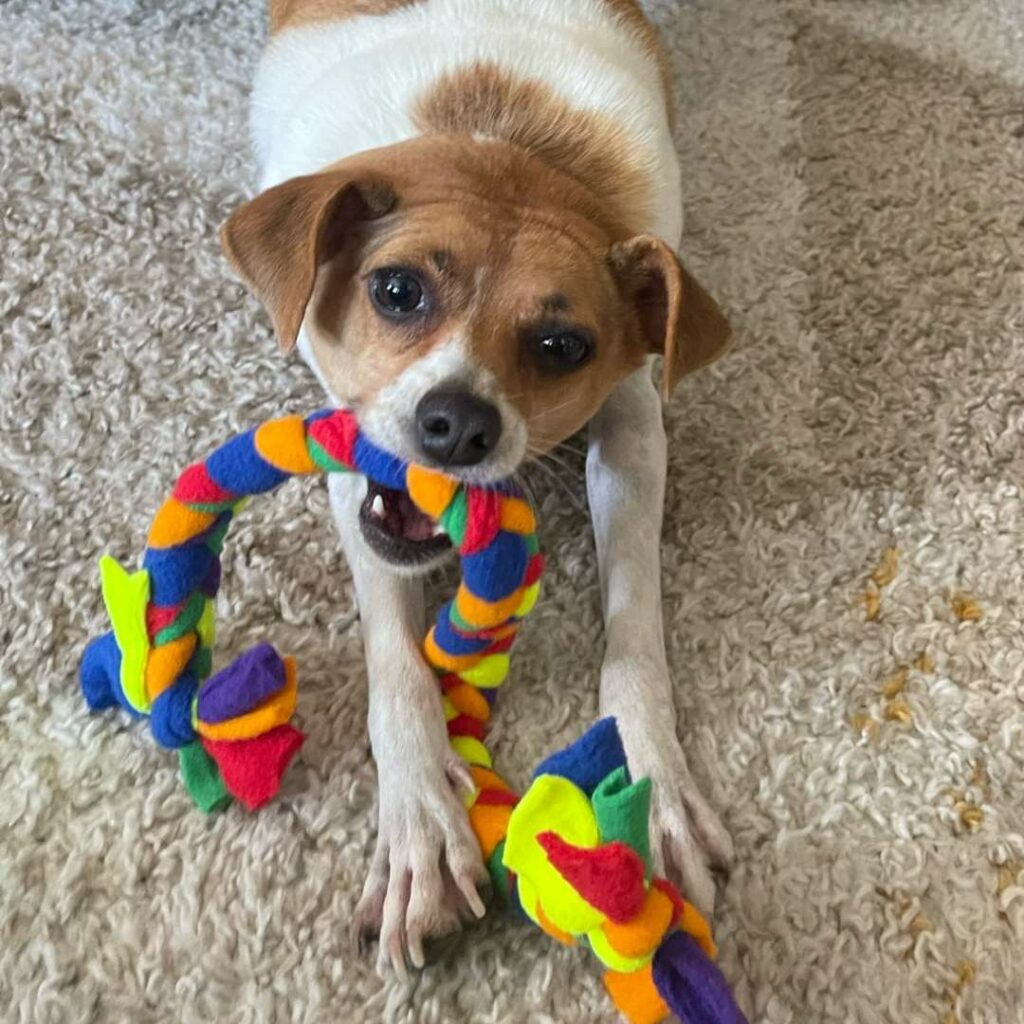
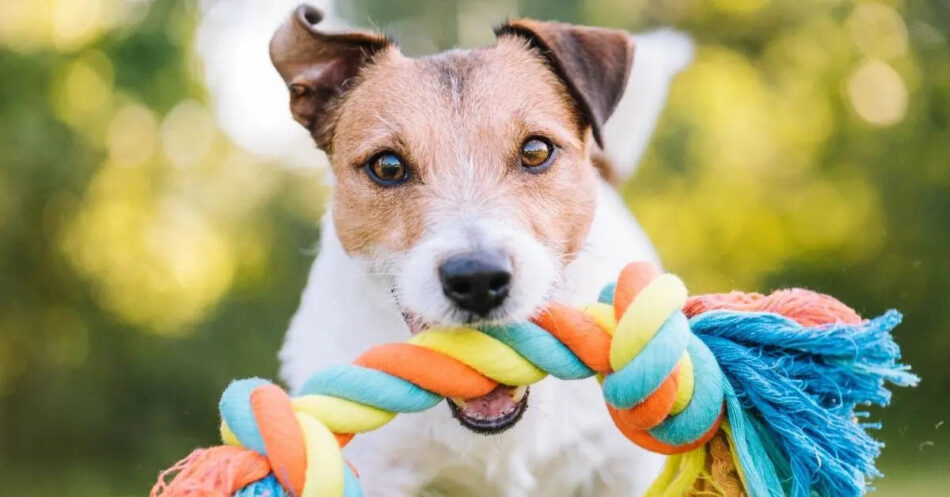
Take them to the backyard or dog park for a game of frisbee or fetch with their favorite toy. (This is my favorite dog bonding toy.) Not only will your dog feel loved, but the exercise will help to keep them (and you) healthy.
If you get tired, hand them a squeaky toy. This will help them entertain themselves. Make your play dates with your furry BFF convenient for both of you.
If you get tired, hand them a squeaky toy. This will help them entertain themselves. Make your play dates with your furry BFF convenient for both of you.
5. Snuggle
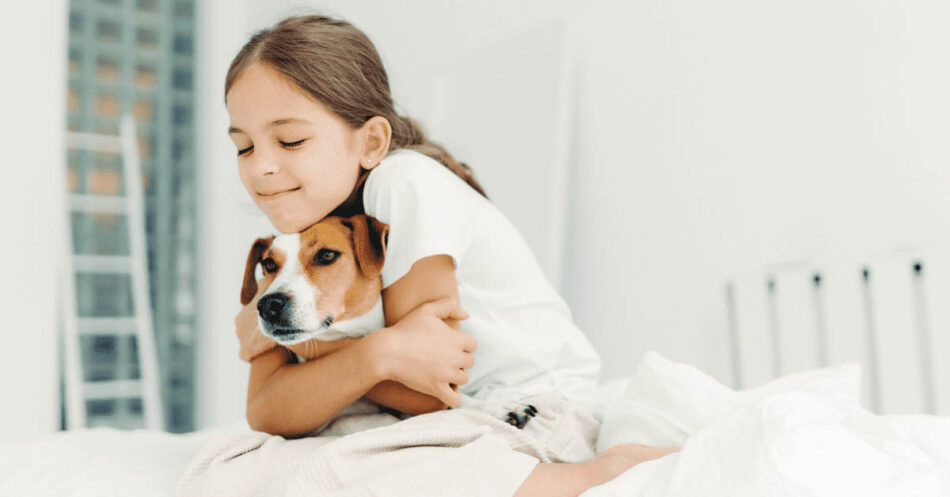
Not all dogs enjoy hugs, but most love cuddling. Canines are pack animals, and close contact makes them feel safe and secure. Allowing your dog to sleep with you is the ultimate display of trust and affection since this is when you are the most vulnerable.
However, even if you’d prefer to keep your bed dog-free, you can still create daily opportunities to show your dog you love them by snuggling up on the couch or in a cozy corner with them on the floor. They’ll be sure to get your message.
Don’t be confused with hugging and snuggling (or cuddling). The words “snuggle” and “hug” have slightly different meanings, but they both refer to showing affection. However, hugging can be more intimidating for dogs because when you hug, you embrace someone with two arms. And it may involve wrapping your arms around the neck or body, which dogs would potentially find threatening or at the very least, uncomfortable or undesirable.
6. Talk to Your Dog
Another way you can show your dog love is to use your “dog voice!” Dogs love being talked to, and they love it when you use their name. Some studies show adult dogs may understand hundreds of words and phrases. Besides, when you talk to your dog in a caring and encouraging tone, they respond to such positive reinforcement.
So go ahead and tell your dog about your day and talk to them about what you’re doing or what you’ll do together. See how many words your dog knows! Positive reinforcement through words can also promote good behavior.
Baby talk with your dog is more than just adorable; it’s effective too! A study published in Animal Cognition revealed that using a natural, playful tone (like the one used when speaking to babies) combined with words relevant to dogs, can possibly grab dogs’ attention more effectively and help strengthen the bond between them and their humans. However, if you’re not a fan of baby talk, no worries, just use your normal tone.
7. Go for Walks Together
When you’re home, you may be snuggling with your dog, but it’s unlikely you’re sharing experiences together. You might be watching TV or scrolling on your phone, things your dog could care less about.
But when you’re walking together, you’re sharing the experience, all the sights, sounds, and smells that accompany the walk—although your dog can smell a lot more than you do!
Enjoying this shared experience can bring you closer together and forge a strong bond.
8. Let Them Kiss You
Licking is their way of showing affection. So when you accept this gift of love, you show your dog how much you love them! Licking releases endorphins and dopamine, making your dog feel calm and secure.
Things to Avoid When Showing Your Dog You Love Them
In essence, showing affection to your dog involves understanding their world and respecting their boundaries. Keep in mind that while your intentions are pure, certain things may not translate the same way in dog language. Reading their cues accurately and adjusting your actions accordingly fosters a loving environment for your four-legged friend.
Here are expressions of affection that your dog may find uncomfortable or undesirable or may be bad for them in the long run.
Hugs
Even though I know that most dogs aren’t the biggest fans of big hugs, I sometimes have to fight the urge to give Tulip a loving squeeze. After all, hugging is one of the most natural ways for humans to show affection, including furry friends. However, for many of our canine companions, a hug from their pet parents is unwelcome or even threatening, especially if they feel trapped.
Additionally, eye contact while hugging can be threatening to many dogs. Even though your dog feels like part of the family, they may still lash out and bite if they feel threatened by close contact
Many pet parents are surprised to learn that their beloved pets are merely tolerating these embraces, with most dogs showing signs of stress when hugged. Sometimes, communication mishaps occur between us and our pets due to our inability to fully comprehend their communication methods. Learning to decipher their unique body language can significantly enhance our bond and elevate their happiness.
It’s easier for everyone to slowly accustom your dog to hugs, linking the action with rewards or treats to foster a positive association. This is vital if you want your pet to be a therapy dog.
However, other dog-friendly expressions of love, such as a scratch behind the ears or games you play together, may be a more welcome substitute for hugs. This way, you’re respecting your furry family members’ boundaries while also preserving the warm bond between you.
Treats
Training through positive reinforcement can be a great way to bond with your pet as well! But while treats are a great way to show your dog attention, especially during training sessions, they should be limited. Some dog parents make the mistake of thinking that the best way to their dog’s heart is through their stomach. Don’t get me wrong—a healthy treat and some goodies have their place, but too many of them can easily lead to weight gain and all of the health issues that come with it.
Paw or Ear Massage
Us humans love a good massage—it’s one of the best ways to wind down and pamper ourselves, especially after a particularly long day. You can do the same for your pups! Some dogs love a good “roobs” behind their ears, and some appreciate some light massages on their paws (not all dogs may like this, as their paws have a lot of delicate and sensitive nerve endings and blood vesse. My colleague’s husky, Egg, for example, hates having her paws touched, as it stresses her out).
Understanding Dog Body Language
Sometimes, we and our four-legged buddies experience a few hiccups in communication, mainly because we don’tfully understand what they’re trying to tell us. Remember, while they can’t use words to express how they feel, our dogs are pretty observant, relying on our nonverbal signals to make sense of their world. Learning how dogs communicate with us can definitely boost our bond and make their tails wag a little happier!
Tail Wagging
It’s a misconception that when dogs wag their tails, they are happy. A wagging tail can mean many things. You might be surprised to know that your furry friend’s tail is its very own little language. According to Dr. Ryan Llera at VCA Animal Hospitals, your dog’s tail position can communicate many things:
- Raised tail. It could mean your dog is alert and ready to face what drew their interest.
- Arching over their back. They might be feeling aggressive.
- Lowered tail. It’s your pet’s way of showing submission or that they’re scared.
- Straight out. They’re probably investigating a new interesting scent or sound.
- Neutral position or slightly raised and wagging. Your buddy is relaxed or happy!
Remember, though, that some breeds of dog have naturally curled tails that coil over their backs, like the Samoyeds, Pugs, and Pomeranians. Meanwhile, others like Greyhounds and Whippets have tails that naturally curl under their bellies, so consider your dog’s natural tail position based on their dominant breed type when reading into their tail position.
The speed of the wag can tell you even more. A fast wag can signal high excitement, a slight wag could mean they’re feeling timid, and a wag with some hip wriggling, well, that’s the canine version of your dog giving you a super-friendly hello! Although, be watchful, because a very fast wag with the tail upright could also mean your pooch is about to become threatening—so remember, a wagging tail isn’t always a friendly one!
Yawning
Dogs yawn for a bunch of different reasons, not just because they’re tired like us humans.
Sometimes yawning is a physical thing that helps stimulate their nervous system or cool their brains, writes Dr. Manetter Kohler in “Why Do Dogs Yawn?” on PetMD. They usually yawn when they’re transitioning from one state to another, like from sleep to wakefulness or from being bored to being alert.
Here’s a fun fact: dogs also yawn to communicate emotional feelings. If a yawn pops out when they’re in a stressful situation, maybe at the veterinary clinic, during a household argument, being hugged too tightly, or being approached by a stranger, they’re trying to calm themselves down. It’s like their version of taking deep breaths!
Plus, dogs even yawn to show they want to avoid conflicts or signal that they’re peaceful. Ever noticed how contagious yawning is? Dogs catch that too, especially from their favorite humans. It’s a sweet way they empathize with us!
If you notice your pup yawning a lot and showing signs they’re not comfortable, they’re likely feeling anxious or stressed. It’s like they’re telling you, “Hey, human, I need a break!” In that case, helping them avoid stressful situations or offering a safe, quiet space for them can be super helpful. Isn’t it amazing how much they can say without using words?
Licking
Dogs love to lick, and their reasons for doing so can vary widely. One of the most common motivations is affection and social bonding. Your dog’s cheeky face-licking greeting when you come home from work is likely their quirky way of saying “You’re the best!” They’re expressing love and delight at your presence.
Licking also serves as a grooming ritual for dogs, helping them to stay clean. And don’t forget their curiosity too. Dogs have a keen sense of smell and taste, so that exploratory lick on an object or post-meal lick on your hand is likely your dog’s taste-based way of understanding their surroundings.
Also, licking can sometimes be a peace offering. Dogs who feel submissive or threatened might lick as a conciliatory gesture. Additionally, excessive licking might indicate possible medical issues, such as allergies or anxiety.
Being aware of the context is crucial in interpreting these canine linguistics. While licking is generally harmless, if it bothers you or seems linked to a health problem, don’t hesitate to talk to a veterinarian for expert advice. So whether as a sign of love or exploration, your dog’s licks are as fascinating as they are varied!
FAQs
Why Should I Show My Dog Love?
Showing love to your dog cements the emotional bond between you and him. As pack animals, dogs have an intrinsic need to feel connected and accepted by their pack, or in the case of a dog, their human family. You validate their place in your life by expressing your love, which is fundamental to their emotional health.
Spending time with your dog, like taking walks together, as mentioned, also demonstrates affection and is something dogs crave and cherish, much like humans do with close friends.
Does My Dog Know When I Am Sad?
From my experience, dogs are very attuned to our emotions. Whenever I cry, my dog will gently place her head or paw on my lap, as if to comfort me. Another one of my dogs, who sadly passed away recently, had even picked up on the unique sound of my sniffles when I cry and would climb onto the bed to lie beside me, offering her silent support.
This personal connection I’ve observed is also backed by research, which indicates that dogs not only know when we’re in distress but they also try to find ways to help us. Their instinct to be by our side during emotional times is a heartwarming reminder of their deep-seated empathy and unconditional love for us.
Does My Dog Know I Love Them?
The short answer is “probably.” But only if you know how to speak your dog language. As mentioned, hugs, kisses, and treats don’t necessarily translate to love in a dog’s native language.
Dogs are pack animals, and they rely on their pack’s queues for signs of approval and love.
They do this primarily through body language, physical touch, and group activities like hunting and exercising.
One of the best things about dogs is how well they know their favorite people. They can tell when we’re stressed out and when we’re calm and happy. And we can be sure that our voices, body language, and actions communicate to them how much they mean to us.
The bond between humans and dogs has huge benefits for people and animals. My ebook explains how bonding with your dog can improve your mind, body, spirit, and community. Click here to download your free copy.
[/vc_column_text][/vc_column][/vc_row]

😊 💕
Yes i do all these things 😊 he’s my alive toy 😍
Aww. He’s a lucky pup!
Actually. Staring into a dogs eyes can mean aggression.
They said that in the article
It only does if the dog doesn’t trust you. For example, if you don’t know the dog. But if he trusts you then go for it.
i’ve noticed my dog really loves and enjoys that, he’ll hold eye contact w me when we cuddle and when i’m petting him! it’s the most adorable
Too cute!!
Not for every dog. It says in this and I already knew anyway for a fact through research that it’s a way of bonding and trust. Everyone knows the eyes are the window to the soul..
I feel you on all things you have said. I am infatuated with my dog and adore him. I do all of these things you mentioned to tell Apollo that I love him.
I have an 8 month old pit when when I talk to him it really sounds like he be talking back to me .My husband says I’ll be dammed it this dog isn’t really taking back to you.But I say to myself I really wonder what he be trying to say or tell me.He just be jumping for joy at the same time.They say pit are bad dogs but I think it’s all in how you raise them.Am I right to trust him or what.As a matter of fact I have two more and they are all beautiful dogs that I wouldn’t give up on for nothing in the world.
He probably is talking back!! And I think you’re right, it’s all in how they’re treated. You sound like a good doggie mama ☺️
Awww, that is too cute! Thanks for sharing, Margie and for taking great care of your sweet pups!
Kristen
It actually has to do with the way dogs are treated. If you treat them with love you will be treated the same way. That is so important. They will love and protect you forever!!!
Yes, that is very important! Thanks for taking good care of your pups!
Kristen
Pits are the most loyal, loveable , cuddling, snoring bed hogs but they will protect you no matter what and I’ve raised two full blood and one pit/terrier (hyper little shit). You are correct its all about how you raised them ,along with how you train them. That’s any breed though
You’re lucky to have a nice pup🐕
Same over here.. she’s all I’ve got
Hi Michael,
Thanks for reading! Glad you have such a sweet pup!
Kristen
I just got a new puppy and I did all these things.. she loves it! Great advice
Congrats on your new puppy!!!
My dog Pebbles yawns when I tell her I love her, usually after a good session of petting, scratching and or brushing. Then she lays by my feet and naps.
Too cute!
😆
Thanks:)
I have tried a few of these and my dog seems to enjoy them.
Aw, I’m glad to hear that! Thanks for reading the blog Hans!
Yes i do all these things 😊 he’s my alive toy 😍 i love my doggo
Thank You so much. My puppy really enjoys them.
I love those. And I love that I can say that I do ALL of those thing with my pup. I guess when you really love them it comes naturally.
Looking into his eyes and saying “I love you” is one of my favs.
That’s my favorite one too Chantal! Thanks for taking the time to comment!
my dog love me no so thank you so much
Yes today i know he loves when I rub his ears back
Awww, yes, they love that!!!
This really helped me cuz I’m a new puppy mom so knowing this helps me a lot thx
Hi Kawaii! I’m so glad you found it helpful! Good luck with your new puppy!
THANK YOU SO MUCH!!!! i’m still a new pup mom so this really helped me!!!!
Hi! I’m so glad you found this helpful!!! Thanks for letting me know.
Kristen
My question is what can I do to counteract the treats my husband luvs 2 give almost 3 times daily. Also, I’m glad that I already do those things with my boy. Yet I will do more. Thank u.
Hi Trishia,
Oh my gosh… my husband used to over treat our dogs too! He did it out of love, but I’d have to remind him that it’s contributing to them gaining weight! Here are a few ideas. Depending on how big or small the treats are, break them into pieces. That way, he can give the treat multiple times, but it’s still only one treat. Another idea is to change the treat to something very healthy and low calorie. You might also remind him that what might look like a small treat to us humans, can be a really big treat for a dog! Kind of like if we treated ourselves to an entire hamburger 2-3 times a day as a “treat”! Then ate our meals too! LOL.
Let me know if any of this helps:)
Kristen
I looked up this article because I realized randomly screaming “I FREAKING LOVE YOU WITH ALL MY HEART YOU BEAUTIFUL BLESSING” to my dog was doing a better job at scaring her than it was at getting the message across. Lol
Ha, ha! You are funny! I bet she knows you love her when you scream that!
Great Article! If my dog could read this one I am pretty much sure that it will thank you for sharing this post. The points you shared are so informative and helpful for strong bonding with my dog.
Hi Jennifer,
Thanks for reading! I am glad that you found this post helpful for you and your pup 🙂
Kristen
Great article! Before we rescued our puppy, Coco, over 13 years ago, I read “Animals in Translation” by Temple Grandin. It taught both my husband and me to communicate with our dog non-verbally. If you’re not a reader, just follow the tips in the article. 🐾
My dog Pebbles yawns when I tell her I love her, usually after a good session of petting, scratching and or brushing. Then she lays by my feet and naps.
Too cute!
Kristen
Thankyou so much for the advise it is all so very helpful!!! The only thing I’m still having trouble with is house breaking my puppy! I have had him now for a month and we take him out immediately after naps, drinks, after he eats and we will come in and he will go again on the floor! I can’t bring myself to smack his butt, is there anything else I can do? I would be so grateful for any advise!!!
I placed my dog on a schedule, where I was taking her outside to use the potty once every our. I would go down 1 hour every week. Now that she is a full year old I take her outside about every three hours. Give him lots of praise as soon as he starts to go, when he’s done give him a healthy low fat treat. Make sure to take him outside in the morning as soon as you and him wake up, I say this because if I wait any longer than an hour after we are both up, she pees on the floor next to the door. I hope that my advise helps you with your journey of raising a puppy!
Thanks for the advice, Hanna! I am glad you found a routine that works best for you and your pup!
Kristen
I don’t know how old your puppy is but my puppy is a Chiweenie and was very very hard to potty train. I finally got a doggy doorbell and I have it on the floor by the door that we go out to go potty. I sat on the floor with her and put her paw on the doorbell and rang it and at the same time I said go potty I open the door and I gave her a treat. And every time I took her out even if she didn’t ring the doorbell I would stop and hit the button and say potty and open the door. Within three weeks she was ringing the doorbell by herself! I found it on Amazon. I have tried the bells on the string for the door but she was afraid of those. It’s funny if she really has to go potty bad she hits it like five times right in the row! She also rings it if she’s a squirrel outside. Lol. But it was a blessing for me and her. I also keep one out on the patio in the lanai so if she’s outside and has to go she rings the bell and I hear it inside and I can let her out. I didn’t want to use the doggie door. Oh and it’s also portable I took it when I went to my sons house can you plug the bell into the outlet and then you put the little door bells by the door. Good luck with your puppy!
Vicky,
What an awesome idea! I am so glad you were able to find a potty training solution for her. It’s just a plus that the bell helps her to chase the squirrels LOL. Thanks for sharing
Kristen
My dogs learned it within 2 weeks because we did this: Take them out starting every 30 minutes and over the course of them growing up, do it every 3 hours/every time they seem to have to go. When they do do it in the house, it may seem harsh but it’s Not, put there nose in it, say “No!” in a firm, deep voice 3 times, then take them outside to go to the bathroom immediately, despite when the last time they went was. And every time they go potty outside, praise them cheerfully and give them a treat. (after they go) Hope this helps! We love our 2 pups dearly and they love us very dearly.
Too cute! Thanks for being such a good dog mom!
Kristen
I agree with most of what you are saying, but please never ever rub a puppy’s nose in their urine or spank them. It takes puppies time to learn to empty their bladder completely. Usually if you keep them out a little longer, they will usually pee a second time. When you take them out, take them to the same area and use the same words in a soft calm voice. I say “go potty”. After they go, have a treat and praise them and give them love immediately. If you catch them in the act inside, make a noise to stop them like clapping your hands. Take them out immediately. Puppies don’t remember after they had an accident. Never punish a puppy for an accident that happened and you didn’t catch it when it happened. When you clean up accidents in the house, always use an enzymatic cleaner on the area after you clean up the urine. This helps to avoid repeat accidents by them smelling the urine. It also helps to confine them to a couple rooms without carpet. so you can watch them more closely and watch for the signals. I have raised many dogs and this system has worked for my puppies every time!
Hi Deb,
Yes, I agree! Positive reenforcement is definitely the way to go. Puppies take months to potty train. It can be frustrating! But, it’s important to remain patient with them, take them out regularly (every couple of hours!), and reward them when they go outside!
Enzymatic cleaners are a must when cleaning up accidents!!
Thanks for sharing your success, Deb!
Kristen
I have 3 big dogs and they all love these! Sammie is a 13 1/2 year old black lab, Gary is a 13 year old beagador (beagle/lab, Sammie’s puppy) and Lola is a 3 year old German Shepard. 🐕 ❤️
Aww, too cute! Thanks for taking good care of your sweet pups!
Kristen
This article is so great!! Thank you, Kirsten♥️
I’ve been reading about how to encourage my 2 big girls (Beauty 3½yrs old & her 10mon old baby Vision) to go potty when it’s raining, so far nothing is helping. Would you happen to know any “magic trick” that doesn’t include building a covered outdoor area or using a doggy raincoat? Thanks😊
Cute post! My dog loves it when I snuggle him. Thanks for sharing!
Glad you like it, Madison! 🙂
My dog is like my living plushie with whom I cuddle all the time 🙂
Aww, too cute! Thanks for sharing and loving your pup!
Kristen
I have a six month old pupper and he LOVES when I rub his ears doesn’t really care for gazing into eyes 😛 Anyways, he especially like snuggles, he also like to sit on me, but whos judging?
Too cute!
Thank you for the words you’ve explained to me 🤍👉♥️👈🤍
Thanks for reading!
Kristen
I do all of these with my 3 but my youngest husky I have had since 6 weeks old and he will look back at me and start to talk and lick my face and jump all over me, the calm down for a good snuggle. My other two I adopted and have yet to built their trust enough to do the affectionate stare however they do love a good cuddle in bed once I showed them the love and affection humans can give… I think my other two huskies were not shown the full amount of love humans can give.
Aww, thanks for sharing Tara! It’s hard to get them used to a loving home after they are rescued from a different place. Thank you for showing them love and being a good dog mom!
Kristen
I absolutely live for my dog always have had close loving relationships with all my pets over the years. They hold a very special place in my life. I have a wonderful little chiweenie (part chiuahha And part dachshund). Just the cutest little guy you have ever seen. Has a happy personality and loves our life together. He’s curled up under the bed sheets right now while I watch tv. I am constantly petting him and rubbing his ears because it just makes me feel happy and loved and I hope he feels the same way. Just the love of my life! My husband runs a close second lol.
My puppy 🐶 is very smart and has learned a few things I have been teaching him and he catches on pretty quick, however I am having a hard time getting him to stop biting. I have tried some things and they work in the moment but he likes to bite your hands and feet.Can you help me???.He is 7weeks old and he sits and he will come when he is called and he does some other commands. But, he still wants to bite (nip).
Hi Steven,
Congrats on your new pup! Nipping is definitely a big challenge when it comes to puppy parenthood. It can be challenging to break that habit. More than likely, he is trying to play with you. So, you have to teach him that is not how you play. Since he is so young, now is a good time to start!
When he nips, take away your hand/foot and sternly tell him “No”. Then replace your hand or foot with a toy for him to play with. Puppies also teeth like babies! So, having teething toys around the house is a must! These gentle toys are great for that.
I also have a blog post about this topic specifically.
Hope this helps! Good luck!
Kristen
My dogs name is Hercules he is a male American Pitbull Terrier. I tried some of these things and now me and my dog have the strongest bond we could have! He and I are best friends. Unfortenetly he is very sick right now, he is 9 years old! Thank you for this.
Thank you for sharing!
I am so sorry to hear your dog is sick. Hope he begins to feel better soon!
Kristen
Ah hope hes ok I’m so attached to my dog shes nearly two I’ve had her from five weeks and had to feed her with a syringe and puppy milk shes doing so well now she sleeps in my arms like a baby
Looking for suggestions on how to stop our 1yr old chihuahua terrier mix from bullying or 13yr old Bichon. She likes to jump on him herd him, chew on his ears. Any help would be greatly appreciated.
My Yorkie is 16 years old. She is blind and deaf. Very healthy. I want her to know how much I love her. She sleeps most of the day. Doesn’t want to cuddle or sleep with me anymore. She lets me kiss her all over though
Nora, it sounds like you’ve found a great way to tell your senior pup how much you love her!
Even I have a puppy.
His breed is beegle and he is almost 1 year.
I love him and so does he.
Sometimes when I wake up I find him on my bed near me sleeping peacefully.
He mostly sleeps all day and has turned a little bit lazy.
He loves to jump and lick me.
He hates to wear clothes.
His name is Coco.
And thank you so much! These things actually helped.
He loves treats and now he starts to cry, beg and ask for extra.
What should I do? I do not won’t him to eat a lot of cookies and other treats.
Please answer
It sounds like Coco is a sweet puppy! Dogs are quick to learn what behavior will give them treats. They quickly catch on that if they beg long enough, you’ll eventually give in. It might be tough to say ‘No’ at first, especially if Coco is giving you puppy eyes. But be consistent. Try redirecting your dog’s energy toward physical activity like a game of fetch or playing with their favorite toy.
Check out my blog post here. I narrowed down the best dog training treats so you can reward your dog for good behavior without helping him pack on the extra pounds!
I have a 1yo husky, her love language is she’ll let me rub her belly for hours and she gets really comfortable. We also maintain long eye contact with each other on a daily basis for a few min and this is one of the best things for me! I wanna try the ears now, I feel she doesn’t really like when I keep touching her head sometimes. Thank you for writing this 🙂
Sounds like you two have an amazing bond! A word of caution, though. Not all dogs like all forms of affection we want to give them. So if your pup doesn’t like having her head touched, the ears might be off limits! I’m so glad you enjoyed the post.☺️
Just a question, why should we raise the left eyebrow when making eye contact?
Avery,
It’s because of a research study that showed dogs tend to raise their left eyebrow when they’re happy to see their owners. By copying this doggy mannerism, it helps you “speak” to your pup and show you care!
Wags,
Kristen