
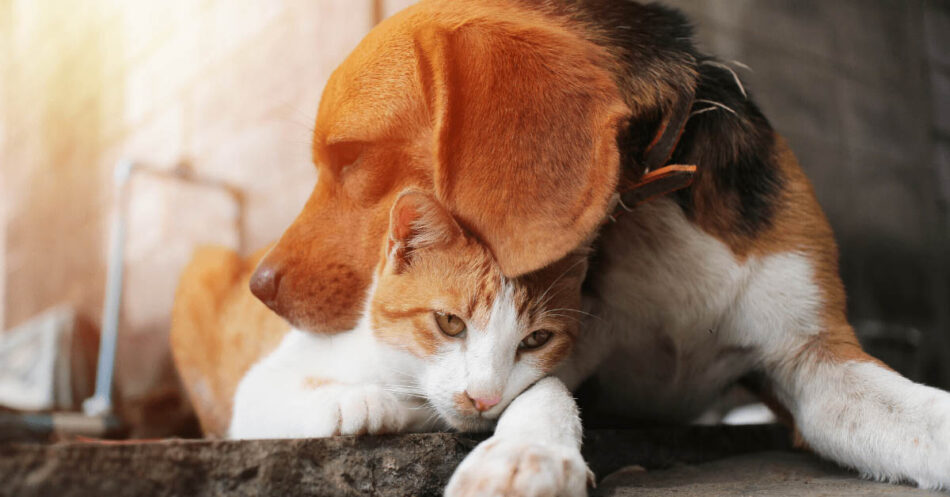
3 Effective Therapies to Ease Your Pet’s Anxiety
This post has been updated for 2026, and since originally writing it, Chilly and Olivia have crossed the rainbow bridge and are deeply missed.
Do any of these situations sound familiar? You come from work to find your sofa cushions ripped apart. Or perhaps there’s urine on the floor. Maybe you dread every thunderstorm or evening of fireworks because you know you’ll spend it trying to soothe your dog. Or your cat is constantly nowhere to be found.
Or maybe your pet seems “off” in quieter ways like refusing food, pacing at night, or suddenly becoming clingy when they used to be independent.
All of these could be signs that your cat or dog is suffering from anxiety.
Did you know that an estimated 50% of pets suffer from Fear, Anxiety, and Stress (FAS)? Even though FAS is a common condition, many pet parents are still struggling to get the help and support they need in recognizing the signs of FAS and treating it effectively.
Recent veterinary behavior data (2025–2026) continues to support that nearly 1 in 2 pets show signs of FAS at some point in their lives, with separation anxiety and noise aversion being among the most reported concerns.
Pin me!

I’m no stranger to the signs of FAS in pets. My dog, Chilly, suffers from noise aversion and separation anxiety. And he’s not alone – my cat, Olivia, experiences anxiety around dogs.
Thankfully, I’ve worked with my veterinarian to find several treatments that work for Chilly and Olivia. So, what should you do to help a pet with anxiety? And how can you identify the signs of FAS in the first place?
Common Signs of Anxiety in Cats and Dogs
If you’ve seen your dog hide, whimper, or shake, you may quickly identify these as signs of anxiety. However, there are many lesser-known anxiety signs that are important to identify.
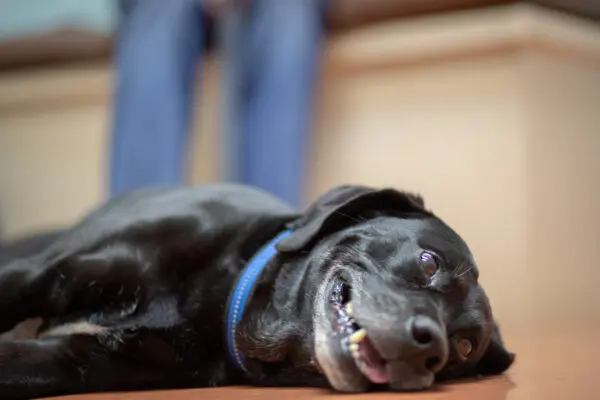
But anxiety doesn’t always look dramatic. In many cases, it shows up as subtle behavior changes that are easy to miss if you’re not looking for them.
Anxiety greatly reduces our pets’ quality of life so we want to be alert to specific warning signs that indicate suffering, especially since not all pets react to FAS in the same way.
If your dog is showing any of the following signs, it’s possible that he is suffering from FAS:
- Clinginess
- Cowering
- Destructiveness
- Furrowed brow or laid-back ears
- Hiding or escaping
- Hypervigilance
- Licking lips
- Pacing or restlessness
- Panting
- Trembling or shaking
- Whining, whimpering, or barking
- Yawning
Additional signs to watch for in dogs:
- Loss of appetite or sudden overeating
- Excessive shedding unrelated to season
- Dilated pupils or “wide-eyed” look
- Compulsive behaviors like tail chasing or over-grooming
And what about cats? Do you know how to identify signs of anxiety in your purr-fect companion?
Although FAS is more commonly recognized in dogs, cats can experience anxiety too. An anxious cat may hide, and even the most responsible pet parent may not think of this as anxious behavior.
Veterinary behaviorist, Dr. Lisa Radosta, says that “Cats have as much fear, anxiety, and stress as dogs in the home environment (but) cat owners are less aware of FAS because a hiding cat may not seem like a stressed cat to them.”
An anxious cat will often:
- Howl
- Hide
- Stop eating
- Refuse to use the litter box
Additional signs to watch for in cats:
Over-grooming or bald patches
Aggression toward people or other pets
Sudden changes in sleep patterns
Avoiding interaction when they were previously social
If you see your pets display any of these signs, it’s time to get help!
Questions to Ask Yourself Before Visiting the Vet
Adding a few key questions can help you better understand your pet’s anxiety triggers and give your vet more insight:
- When did the behavior start?
- Is it triggered by a specific event (storms, visitors, leaving the house)?
- How long does each episode last?
- Has anything changed recently (new pet, move, schedule change)?
- Is the behavior getting worse, better, or staying the same?
How to Get Help for Your Pet with Anxiety
If you suspect that your pet is suffering from FAS, please talk to your veterinarian as soon as possible. FAS is a diagnosable condition that can be treated or managed with natural solutions, behavior modifications, or in serious cases, with medication prescribed by your vet.
Even if your pet’s FAS symptoms aren’t life-threatening, anxiety greatly affects their quality of life, just like a human who suffers from panic attacks.
Before visiting your veterinarian, create a diary or symptom list that includes:
- Behavioral signs, like destroying property or eliminating in the house.
- Physical signs, like trembling or drooling.
- Emotional signs, such as clinginess or whimpering.
Also include:
- Time of day symptoms occur
- Environmental triggers (sounds, people, separation)
- Duration and intensity of episodes
It’s important to note that your veterinarian may not ask about your pet’s anxiety during a routine wellness visit, so it’s important to take a proactive approach and schedule an appointment to discuss your pet’s symptoms.
In 2026, more veterinarians are recommending early intervention, as untreated anxiety can lead to long-term behavioral and even physical health issues.
Most veterinarians are quick to recommend natural solutions for pets with mild to moderate anxiety, and these are often effective. However, a layered approach using multiple products works best, especially for moderate to severe anxiety.
This “multi-modal” approach is now considered the gold standard in 2026 for treating pet anxiety.
Of course, every pet is different so, under the supervision of your veterinarian, you might need to experiment with several options to find a treatment plan that soothes your pet.
Ultimately, it’s possible that your pet may need a prescription medication to truly overcome anxiety.
Complementary Therapies for Cats and Dogs with Anxiety
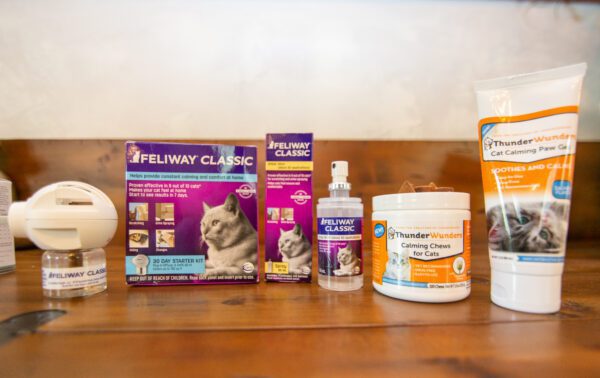
Over the years, I’ve used a few complementary therapies from ThunderWorks and FELIWAY that are designed to work together with my pet’s anxiety medication.
Every product from ThunderWorks and FELIWAY is tested and recommended by veterinarians. In fact, for years, ThunderWorks and FELIWAY have created solutions that are easy to use, drug-free, and 100% satisfaction guaranteed! Each of their unique anxiety solutions works in a different way to calm your pet, and you can combine them for the best results.
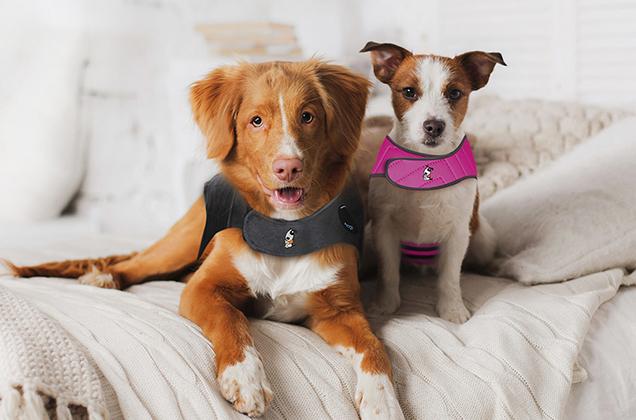
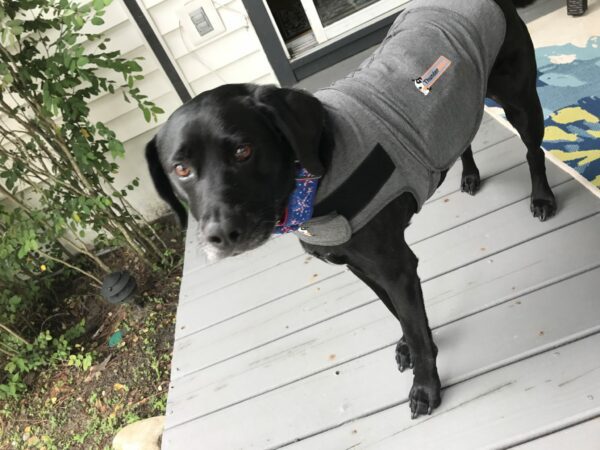
- ThunderShirt is the original pet anxiety solution, proven to be 80% effective in treating FAS for cats and dogs who have trouble with loud noises, travel, separation anxiety, and veterinarian visits. I’ve used ThunderShirt for years with my dog, Chilly, and it really does help to soothe him. Typical price range (2026): $40–$55 depending on size and style.
- ThunderWunders calming chews are designed to promote rest and relaxation for cats and dogs. The chews feature natural ingredients like Tryptophan, Chamomile Flower, Thiamine, and hemp. Typical price range (2026): $18–$30 per container depending on count and formula.
- ThunderEase and FELIWAY are plug-in diffusers and sprays that gently circulate calming pheromones. Personally, I love using FELIWAY diffusers for my cat, Olivia. In fact, when we adopted our new puppy Tulip, I put FELIWAY pheromone diffusers in all of Olivia’s favorite rooms to help her get used to Tulip’s presence in the house. Typical price range (2026): $25–$35 for starter kits and $15–$25 for refills.
Your Pet Can Overcome Anxiety
Fear, anxiety, and stress have a huge impact on a pet’s quality of life. Those conditions can change their behavior and even cause stress for you and your family.
While an estimated 50% of pets suffer from Fear, Anxiety, and Stress (FAS), 30% of dogs and cats will suffer chronic anxiety, and many more have mild to moderate problems with stress. The top reason why pets are surrendered to shelters is because of behavioral problems that their family can’t manage – behavioral problems that are often caused or exaggerated by FAS.
The good news is that awareness around pet anxiety has grown significantly in recent years, and there are more effective tools and resources available now than ever before.
But, the important thing to remember is that your pet doesn’t have to live with anxiety and fear. You can help them live calmer and better lives by talking to your veterinarian and by using calming, natural solutions like the products from ThunderWorks and FELIWAY. I’m so happy that I talked to my veterinarian about Chilly and Olivia’s anxiety!






Hi. Thanks for all the good advice on your site. My 11 year old labX has anxiety. She is on trepiline for over a year now. In recent weeks she doesn’t allow me much sleep, whether it is at night or even a catch up nap during the day. At night it would be up to 5 or 6 wake ups with the majority spaced in the first half of my 7 to 8 hrs. A day nap after about 15 minutes or so. The vet has ruled out any health reasons and says it appears to be related to her high levels of anxiety. Is there any advice on what i can do as it’s starting to wear us both down. When she wakes me up i calm her down and as soon as she lies down and gives a big sigh out, i go back to sleep. But it doesn’t last long. If instead of going back to bed i stay up she stays put and appears relaxed, sleeps well, opens her eyes every now and then, checks where i am and goes back to sleep. Other than waking me up, i haven’t noticed any other new unusual behaviours.
Hi Anya,
I am sorry this is happening! Is it possible she needs to be on a different anxiety medication? I would ask your vet what all of her options are. It sounds like if her anxiety is severe, she may just need something different that works best for her.
To me, this does sound like separation anxiety. She wants to be near you at all times! You can try putting a Adaptil diffuser in your bedroom/the room she sleeps in. These release natural calming pheromones in the air that help dogs to feel calm. You can get one here.
The Anxious Pet also makes great CBD and Hemp products for dogs that I find very helpful. They are veterinary formulated so I can trust that they are safe! Try sprinkling the oil on her food before she goes to bed to help keep her calm.
I hope this helps!
Kristen
Can. You get this thunder works and feilway at Walmart for pets or is it only certain places
Patricia, great question! I suggest checking your local Walmart to see if they have those items in stock. Or you can purchase Feliway diffuser plug-ins here. And you can purchase Thunderease by Thunderworks here.
I hope you find these products as helpful as we have!
Kristen